Predict, then decide
Routes, schedules and energy plans depend on numbers nobody knows in advance, so a model predicts them first.
About
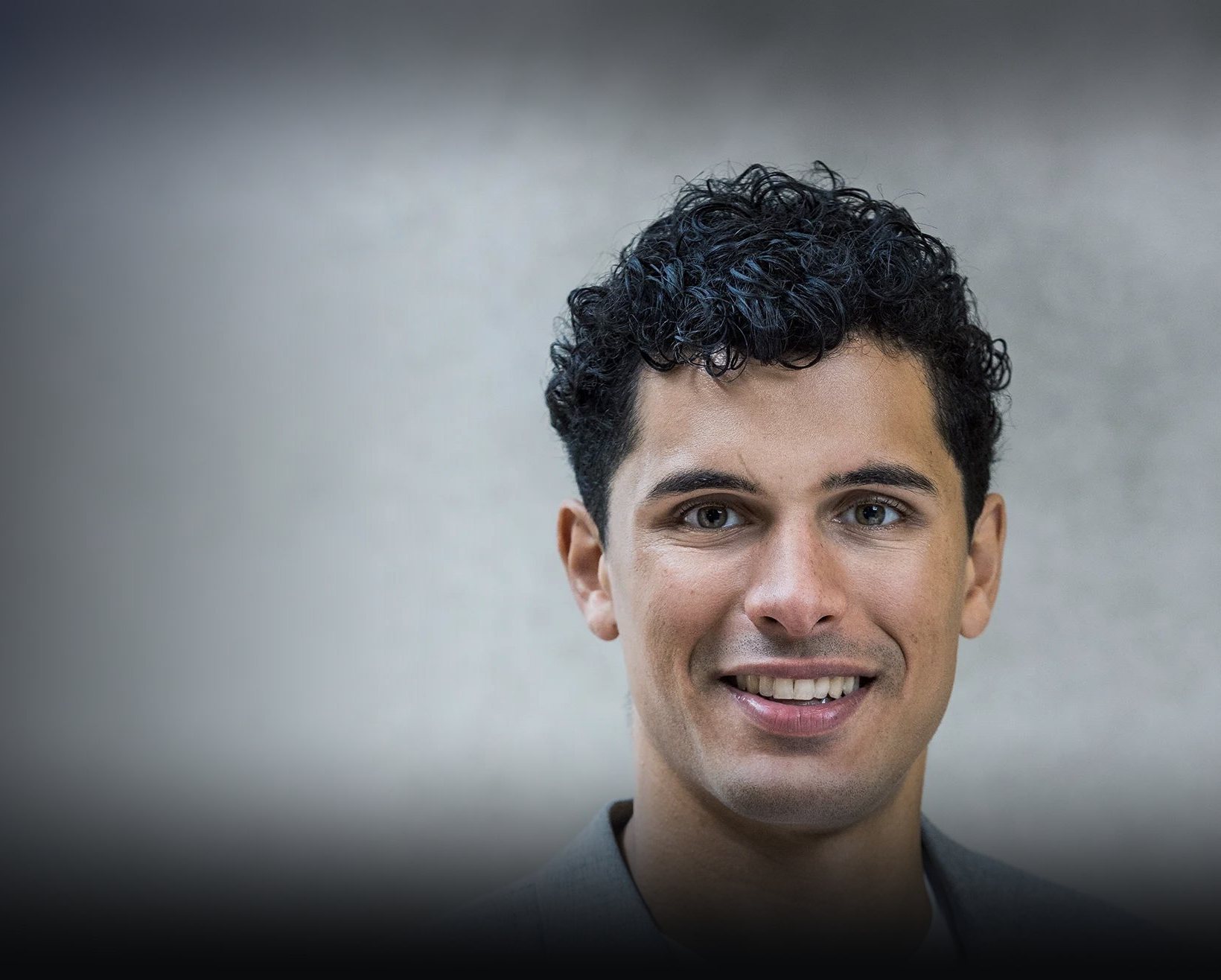
Noah Schutte is a PhD researcher in the Algorithmics group at TU Delft. He works on decision-focused learning and predict-then-optimize: training machine-learning models for the quality of the decisions they feed, rather than for prediction accuracy alone. His background is in mathematical optimization, stochastic programming and machine learning.
Routes, schedules and energy plans depend on numbers nobody knows in advance, so a model predicts them first.
Decision-focused learning trains that model on how good the final decision is, instead of how close each prediction is.
His methods make that training hold up when data is noisy or limited, and keep it fast on bigger problems.
AI with guarantees on its predictions and decisions, through proper modelling of real-world uncertainty.
News
Add conference visits, talks and new papers there.
Publications
arXiv:2605.18005 · May 2026
Decision-focused learning trains a prediction model on how good the final decision is. The catch: it usually re-solves the whole optimization problem over and over during training, which gets slow fast. This paper recasts the task as cost-sensitive regression, where over- and under-predictions are penalised by what they do to the decision. It needs at most one solve per training example, matches the best existing methods on decision quality, and scales to problem sizes decision-focused learning had not handled before.
@misc{schutte2026scalable,
  title         = {Scalable Decision-Focused Learning through Cost-Sensitive Regression},
  author        = {Schutte, Noah and Berden, Senne and Guns, Tias and Postek, Krzysztof and Yorke-Smith, Neil},
  year          = {2026},
  eprint        = {2605.18005},
  archivePrefix = {arXiv},
  primaryClass  = {cs.LG}
}Proceedings of the 35th International Joint Conference on Artificial Intelligence, IJCAI-26, pp. 2337-2345
To plan under uncertainty, a model can predict one scenario (a single best guess) or a full probability distribution. This paper looks at which features of a problem decide what kind of prediction, a "decision proxy", is enough to make a good decision, and proposes new options that add little computation. It is tested on continuous and discrete problems where both the goal and the constraints are uncertain.
@inproceedings{schutte2026sufficient,
  title     = {Sufficient Decision Proxies for Decision-Focused Learning},
  author    = {Schutte, Noah and Veviurko, Grigorii and Postek, Krzysztof and Yorke-Smith, Neil},
  booktitle = {Proceedings of the Thirty-Fifth International Joint Conference on Artificial Intelligence, {IJCAI-26}},
  pages     = {2337--2345},
  year      = {2026}
}Proceedings of the 33rd International Joint Conference on Artificial Intelligence, IJCAI-24, pp. 4868-4875
Decision-focused learning usually trains on "regret": how much worse a decision is than the best possible one for each past example. But the best decision for a single noisy example can be far from the best decision on average, so the model learns the wrong lesson. The paper measures how randomness and lack of knowledge both distort this signal, then proposes three more robust loss functions. They improve results on unseen data without extra training time, on shortest-path, travelling-salesperson and energy-scheduling problems.
@inproceedings{schutte2024robust,
  title     = {Robust Losses for Decision-Focused Learning},
  author    = {Schutte, Noah and Postek, Krzysztof and Yorke-Smith, Neil},
  booktitle = {Proceedings of the Thirty-Third International Joint Conference on Artificial Intelligence, {IJCAI-24}},
  pages     = {4868--4875},
  year      = {2024},
  doi       = {10.24963/ijcai.2024/538}
}Proceedings of the 33rd International Joint Conference on Artificial Intelligence, IJCAI-24, Doctoral Consortium, pp. 8504-8505
His PhD agenda in two pages. Optimization models often pretend the world is certain so they can be solved. Uncertainty that comes from missing knowledge, called epistemic uncertainty, is especially hard to model. The aim: make decisions more robust in practice without making the models harder to solve, with decision-focused learning as the main tool.
@inproceedings{schutte2024optimization,
  title     = {Optimization Under Epistemic Uncertainty Using Prediction},
  author    = {Schutte, Noah},
  booktitle = {Proceedings of the Thirty-Third International Joint Conference on Artificial Intelligence, {IJCAI-24}},
  pages     = {8504--8505},
  year      = {2024},
  doi       = {10.24963/ijcai.2024/967}
}Sources: IJCAI proceedings, arXiv, TU Delft. New papers are added automatically from dblp.